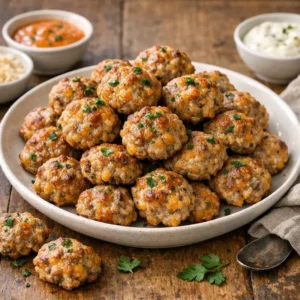
Sausage balls are a three-ingredient Southern staple — raw pork sausage, sharp cheddar cheese, and baking mix rolled into little rounds and baked until golden and irresistible. The whole recipe comes together in about 30 minutes, and it feeds a crowd without breaking a sweat. If you need a no-fuss appetizer, party snack, or hearty breakfast bite, this is it.
- 1 lb raw pork breakfast sausage (such as Jimmy Dean regular or hot), cold
- 2 cups sharp cheddar cheese, freshly shredded from a block
- 1½ cups Bisquick or all-purpose baking mix
- Optional: ½ teaspoon garlic powder
- Optional: ½ teaspoon onion powder
- Optional: pinch of cayenne pepper
- Optional: 2 oz softened cream cheese (for extra moisture and richness)
- Preheat your oven to 375°F. Line one or two large baking sheets with parchment paper or a silicone baking mat.
- Shred the cheddar cheese from a block using a box grater. Keep it refrigerated until ready to use — cold cheese shreds more cleanly.
- Add the raw pork sausage, freshly shredded cheddar cheese, and baking mix to a large mixing bowl. If using any optional add-ins such as cream cheese, garlic powder, onion powder, or cayenne, add them now.
- Mix everything together using your hands, pressing and kneading with your fingers and palms until no dry pockets of baking mix remain and the cheese is evenly distributed throughout. This takes about 2–3 minutes of active mixing. The mixture should feel cohesive and slightly tacky, not crumbly or wet.
- Scoop portions of the mixture and roll them between your palms into smooth balls about 1 to 1¼ inches in diameter (roughly the size of a large marble). A 1-tablespoon cookie scoop makes this faster and more consistent. This batch makes approximately 40–45 sausage balls.
- Arrange the balls on the prepared baking sheet about 1 inch apart to allow for air circulation and even browning.
- Bake for 20–25 minutes, until the sausage balls are golden brown on the outside, slightly cracked on the surface, and an instant-read thermometer inserted into the center reads at least 160°F. The bottoms will be a deep golden-brown where they contact the pan.
- If you want more color on top, broil for the final 1–2 minutes, watching closely so they don’t overbrown.
- Remove from the oven and let rest for 5 minutes before serving. Arrange on a platter with toothpicks and your dipping sauce of choice such as honey mustard or ranch dressing.
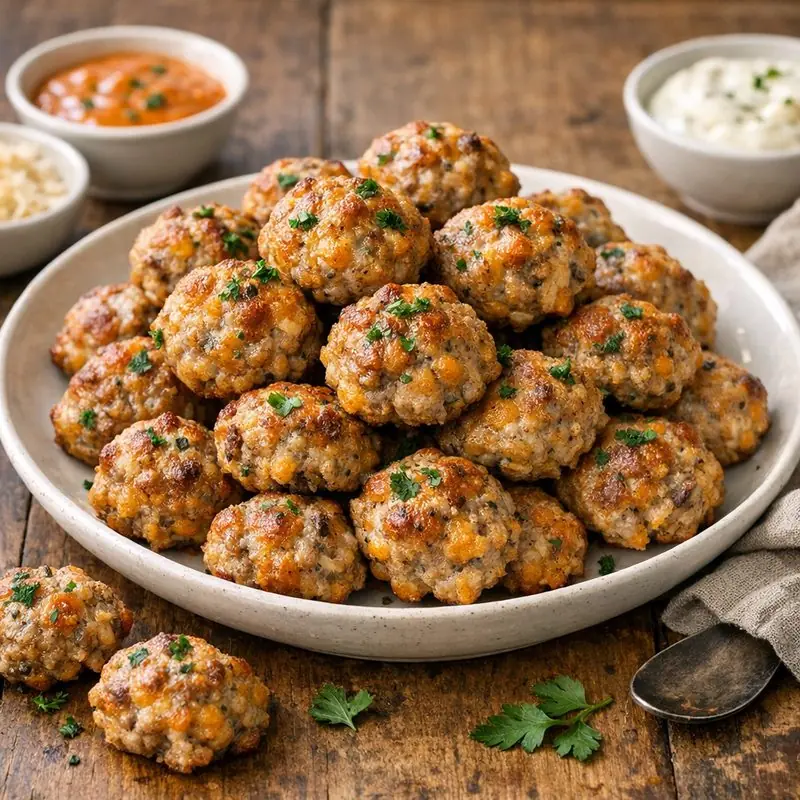
The outside is lightly crisp, with a surface that cracks just enough to show the savory, meaty interior beneath. Pop one open and you’ll see a tender, dense crumb flecked with orange-gold cheddar throughout. They smell like a holiday morning — that unmistakable mix of spiced pork sausage and melted cheese hitting a hot oven. The flavor is salty, savory, slightly peppery, and deeply satisfying in a way that makes it very hard to stop at two.
What makes this version work is the ratio. Too much baking mix and sausage balls turn dry and crumbly — they fall apart before they reach your mouth. Too little and they’re greasy and dense. The right balance keeps them moist inside with just enough structure to hold together. Using freshly shredded cheese instead of the pre-shredded bag variety is also a quiet game-changer: pre-shredded cheese is coated in anti-caking starch, which interferes with how it melts and binds. Fresh-shredded sharp cheddar melts right into the meat and creates that cohesive, almost gooey pocket of cheese inside every bite.
Why You’ll Love This Recipe
- Only 3 core ingredients. Sausage, cheese, and baking mix. That’s the whole foundation. Everything else is optional seasoning or dip on the side.
- Ready in 30 minutes. Mix, roll, bake. There’s no marinating, no searing, no complicated prep. It’s genuinely one of the fastest party foods you can put on a table.
- Make-ahead friendly. You can roll them the night before and refrigerate unbaked, or freeze them fully baked and reheat in minutes. They’re built for entertaining.
- Crowd-pleasing every single time. These disappear fast at parties, tailgates, holiday brunches, and potlucks. Kids love them, adults love them, and nobody ever asks what’s in them — they just reach for another one.
- Endlessly customizable. Use hot sausage instead of mild. Add jalapeño, cream cheese, garlic powder, or swap in pepper jack. The base recipe is forgiving and loves to be riffed on.
What You’ll Need
These ingredients are simple, but the details matter. Here’s what to grab and what to know about each one.
- 1 lb raw pork breakfast sausage — Use it straight from the package, cold. Jimmy Dean regular or hot both work great. The fat content in raw sausage is what keeps these moist, so don’t swap in a lean turkey sausage unless you’re prepared to compensate with a tablespoon of olive oil or cream cheese to add fat back in.
- 2 cups shredded sharp cheddar cheese — Shred it yourself from a block. A sharp or extra-sharp cheddar gives the most flavor impact. Mild cheddar works but tastes flat by comparison. You can also use a mix of cheddar and pepper jack for a little heat.
- 1½ cups Bisquick (or any all-purpose baking mix) — Bisquick is the classic. Store-brand baking mix works identically. If you want to go from scratch, whisk together 1½ cups all-purpose flour, 2¼ teaspoons baking powder, ¾ teaspoon salt, and 2 tablespoons cold butter cut in until crumbly.
- Optional add-ins: ½ teaspoon garlic powder, ½ teaspoon onion powder, a pinch of cayenne, 2 oz softened cream cheese (adds richness and helps the mix come together more easily), or 1 tablespoon fresh chopped rosemary.
That’s really it. If you want a dipping sauce — and you should — a simple honey mustard or ranch dressing on the side is all you need. For something with a little more Southern charm, try a creamy garlic dipping sauce alongside them on the platter.
How to Make Classic Sausage Balls
- Preheat your oven to 375°F. Line a large baking sheet (or two) with parchment paper or a silicone baking mat. This prevents sticking and makes cleanup a one-step deal.
- Shred your cheese. Do this first so the cheese is ready to go. Cold cheese shreds more cleanly than room-temperature cheese. Keep it in the refrigerator until you’re ready to mix.
- Combine everything in a large bowl. Add the raw sausage, shredded cheddar, and baking mix to a large mixing bowl. If you’re adding cream cheese, garlic powder, or other seasonings, add them here too. Don’t be shy about getting in there with your hands — this is a mix that needs pressure and warmth to fully come together. Use your fingers and palms to work the ingredients until no dry pockets of baking mix remain and the cheese is evenly distributed throughout. This takes about 2–3 minutes of active mixing. The mixture should feel cohesive and slightly tacky, not crumbly or wet.
- Roll into 1-inch balls. Scoop portions of the mixture and roll them between your palms into smooth balls about the size of a large marble or a ping pong ball — roughly 1 to 1¼ inches in diameter. Uniform sizing matters here: balls that are too big stay raw in the center; balls that are too small overcook and dry out. A small cookie scoop (1 tablespoon size) makes this faster and more consistent. This batch makes approximately 40–45 sausage balls.
- Arrange on the baking sheet with space between them. Place the balls about 1 inch apart. They don’t spread like cookies, but they do need a little air circulation to brown evenly on all sides rather than steaming in a crowd.
- Bake for 20–25 minutes. The sausage balls are done when they’re golden brown on the outside, slightly cracked on the surface, and a probe thermometer inserted into the center reads at least 160°F (the USDA safe temperature for pork). The bottoms will be a deep golden-brown where they contact the pan. If you want a little more color on top, broil for the final 1–2 minutes — watch them closely. They go from perfect to overdone fast under a broiler.
- Rest for 5 minutes before serving. They hold their heat well and taste even better after a brief rest, when the cheese inside settles and the fat redistributes. Serve on a platter with toothpicks and your dipping sauce of choice.
Tips, Variations & Serving Ideas
Use Cream Cheese for Extra Moisture
Adding 2–4 oz of softened cream cheese to the mix is not traditional, but it’s genuinely effective. The cream cheese acts as a binder and adds fat, which keeps the interior moist and silky even if you accidentally leave them in the oven a minute or two too long. Many home cooks swear by this variation, especially if their sausage tends to be on the leaner side.
Go Hot for a Spicy Kick
Swapping regular pork sausage for hot pork sausage (Jimmy Dean Hot is widely available) is the single easiest way to add punch. You can also keep mild sausage and add ½ teaspoon cayenne pepper or swap half the cheddar for diced fresh jalapeños and pepper jack. These are great alongside a cool ranch dip, which balances the heat perfectly. If you love bold flavors, you’ll also enjoy air fryer jalapeño popper bites as a companion appetizer on a game day spread.
Serving Suggestions
Sausage balls work beautifully as a game day appetizer, a holiday party snack (especially at Christmas and Thanksgiving — they’re a Southern tradition on both), or as part of a breakfast or brunch spread alongside scrambled eggs and fresh fruit. Set them out with toothpicks, a small bowl of honey mustard, and a bowl of ranch. They also hold well on a warming tray for a couple of hours, which makes them ideal for buffet-style entertaining. For a full brunch setup, serve them next to a cheesy egg breakfast casserole and let guests help themselves.
Make-Ahead and Storage
Refrigerate unbaked balls: Roll them out up to 24 hours ahead, cover the baking sheet with plastic wrap, and refrigerate. Bake straight from the fridge — just add 2–3 extra minutes to the bake time since they’re starting cold.
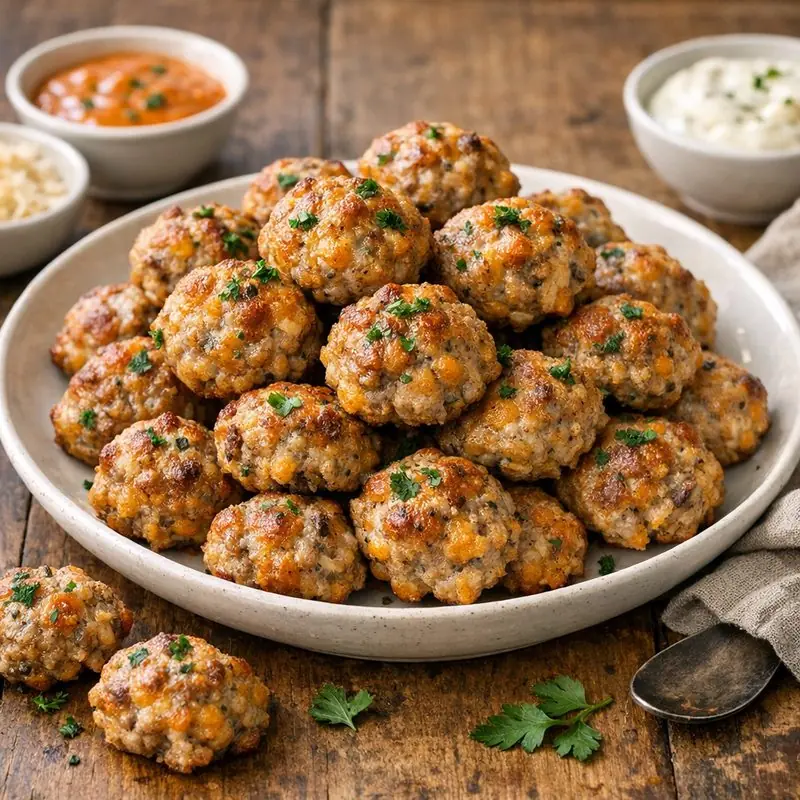
Freeze unbaked balls: Place rolled balls on a parchment-lined sheet and freeze until solid, about 2 hours. Transfer to a zip-top freezer bag and store for up to 3 months. Bake from frozen at 375°F for 28–32 minutes.
Freeze baked balls: Let them cool completely, then freeze in a single layer before transferring to a bag. Reheat in the oven at 350°F for 10–12 minutes, or in the air fryer at 350°F for 4–5 minutes until warmed through and re-crisped. The air fryer method is especially good — it brings back that just-baked texture. Speaking of which, if you have an air fryer and want to cook these in it directly, see the section below.
Air Fryer Method
Since this site is all about air fryer cooking, here’s how to adapt the recipe: preheat your air fryer to 370°F. Arrange sausage balls in a single layer in the basket with space between each one — don’t stack or crowd them or the bottoms won’t cook properly. Air fry for 10–12 minutes, shaking the basket or flipping the balls halfway through. They come out beautifully browned on all sides, with a slightly crispier exterior than oven-baked. Check the internal temperature at 10 minutes — once they hit 160°F, they’re done. This method is faster and produces an even crispier surface. It’s ideal for smaller batches. For a full party portion, work in batches and keep finished ones warm in a 200°F oven while you cook the rest. The air fryer is a genuinely excellent tool here, and if you’re new to using it for snacks and appetizers, you’ll also want to try air fryer pigs in a blanket using a similar approach.
Common Mistakes and How to Fix Them
Problem: Sausage Balls Are Dry and Crumbly
Why it happens: Too much baking mix relative to the sausage, or the sausage was too lean, or they were overbaked. Pre-shredded cheese also contributes to dryness because the starch coating absorbs moisture from the mix.
Fix it: Stick to the 1 lb sausage to 1½ cups baking mix ratio. Shred your own cheese. Add 2 oz of softened cream cheese to the mix to add fat and binding power. Pull them from the oven as soon as the internal temp hits 160°F — there’s no benefit to going longer.
Problem: The Mix Won’t Hold Together
Why it happens: The mixture looks crumbly and the balls fall apart when you try to roll them. This usually means the sausage was too cold or wasn’t worked enough.
Fix it: Let the sausage sit at room temperature for 10 minutes before mixing. Then mix more aggressively with your hands — really knead it. The warmth from your palms helps the fat in the sausage start to soften and bind everything together. If it’s still not coming together, add 1 tablespoon of milk at a time (up to 3 tablespoons) until the mixture holds when pressed.
Problem: The Sausage Balls Are Greasy
Why it happens: High-fat sausage releases a significant amount of grease during baking, which pools on the pan and can make the bottom of each ball saturated.
Fix it: Bake on a wire rack set over a rimmed baking sheet. This elevates the balls so the released fat drips down and away rather than pooling beneath them. The bottoms stay crispier and the balls look better too. Alternatively, blot the finished balls briefly with a paper towel before serving.
Problem: The Centers Are Raw
Why it happens: The balls were rolled too large, the oven temperature was too low, or they were packed too tightly on the pan.
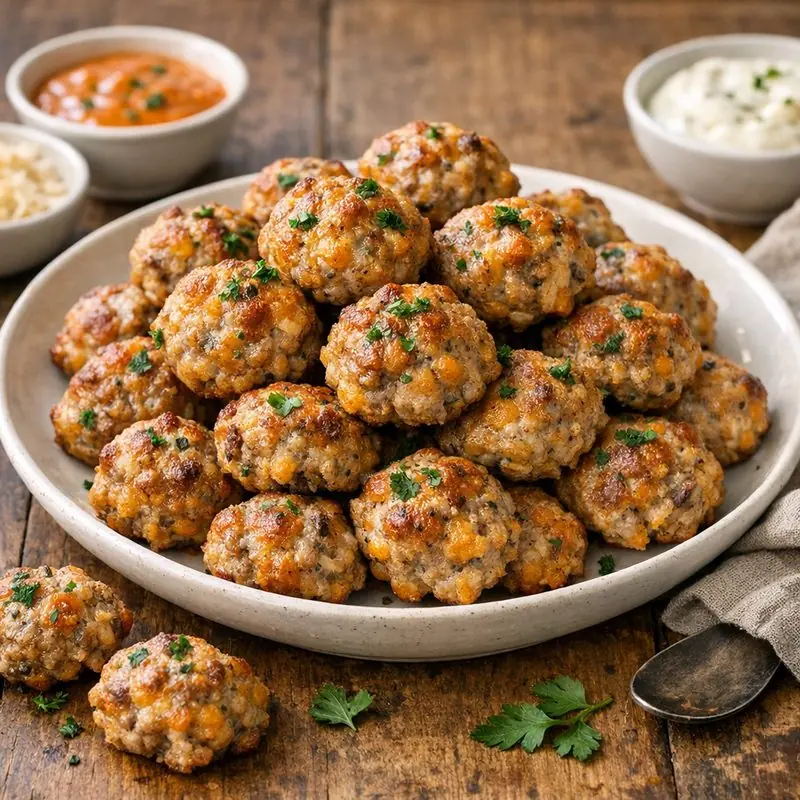
Fix it: Keep balls to 1–1¼ inches. Use an oven thermometer to verify your oven is actually at 375°F (many ovens run 25°F low). Space them at least 1 inch apart. And always verify doneness with a thermometer rather than relying only on color — a beautiful golden-brown outside can still hide an underdone center.
You May Also Like
Frequently Asked Questions About Classic Sausage Balls
Can I make sausage balls ahead of time?
Absolutely — sausage balls are one of the most make-ahead-friendly appetizers out there. You can roll them and refrigerate unbaked for up to 24 hours, or freeze them unbaked for up to 3 months. Baked sausage balls keep in the refrigerator for up to 4 days and reheat beautifully in the oven or air fryer.
What’s the best sausage to use for sausage balls?
A standard pork breakfast sausage like Jimmy Dean (regular or hot) is the most reliable choice. It has the right fat content and seasoning to give sausage balls their characteristic flavor without any extra work. Avoid extra-lean pork sausage or turkey sausage unless you add cream cheese or another fat source to compensate — otherwise the texture turns tough and dry.
Can I use a gluten-free baking mix?
Yes. A gluten-free all-purpose baking mix like Bob’s Red Mill Gluten Free Biscuit & Baking Mix or Krusteaz Gluten Free All-Purpose Flour works in a 1:1 substitution for regular Bisquick. The texture is very similar and most guests won’t notice the difference. Just make sure all other ingredients (like the sausage) are certified gluten-free if you’re cooking for someone with celiac disease.
Why do my sausage balls fall apart?
The most common reason is insufficient mixing. The raw sausage needs to be worked with your hands until it fully incorporates with the cheese and baking mix — it takes more effort than you’d expect. If the mixture is still crumbly after thorough mixing, add milk one tablespoon at a time until it holds together when pressed. Rolling with slightly damp hands also helps.
What dipping sauce goes best with sausage balls?
Honey mustard is the classic pairing — the sweet tang cuts through the richness of the sausage and cheese perfectly. Ranch dressing is a close second, especially with spicy sausage balls. For a Southern twist, try serving them with a jar of pepper jelly alongside a little cream cheese — it sounds unconventional but the sweet-heat contrast is genuinely excellent. You can find a homemade honey mustard dipping sauce recipe that comes together in about 2 minutes if you want to skip the bottled version.
Ready to Roll?
This classic sausage balls recipe is the kind of thing you make once and then never stop making. It earns its place on every holiday platter, every game day spread, and every lazy weekend brunch table because it’s reliable, crowd-pleasing, and genuinely delicious — not just easy. The hardest part is rolling 40 little balls, and even that goes fast with a cookie scoop and a good podcast.
Give these a try and let us know how they turned out in the comments below. Did you go classic with mild sausage and sharp cheddar, or did you add some jalapeño heat? Save this recipe to Pinterest so you’ve always got it handy when the next party rolls around — it’s one of those recipes you’ll find yourself reaching for again and again.
Note: photos on this site are AI-generated illustrations of the finished dish. Recipes are developed from established cooking techniques; adjust seasoning and doneness to taste.