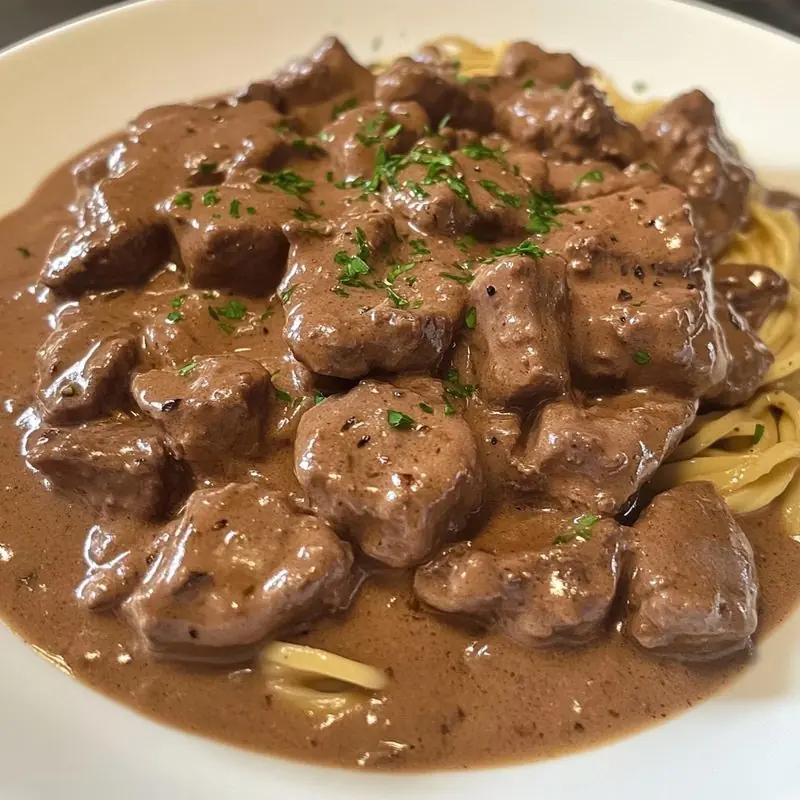
Classic Beef Stroganoff is a hearty, one-pan dinner of seasoned ground beef and mushrooms simmered in a deeply savory, sour cream–based sauce — served over wide egg noodles in about 40 minutes. It suits busy weeknights, cold-weather cravings, and anyone who wants a genuinely satisfying dinner without spending hours at the stove.

- 1 lb ground beef, 85/15 fat ratio
- 8 oz cremini mushrooms, sliced ¼ inch thick
- 1 medium yellow onion, finely diced
- 3 cloves garlic, minced
- 1½ cups low-sodium beef broth
- ¾ cup full-fat sour cream, brought to near room temperature
- 1 tablespoon Worcestershire sauce
- 1 teaspoon Dijon mustard
- 2 tablespoons all-purpose flour
- 2 tablespoons unsalted butter
- 1 tablespoon olive oil or neutral oil
- ½ teaspoon kosher salt, plus more to taste
- Freshly ground black pepper, to taste
- 12 oz wide egg noodles
- 1 tablespoon unsalted butter, for tossing noodles
- Fresh flat-leaf parsley, chopped, for garnish
- Bring a large pot of well-salted water to a boil. Cook the egg noodles 1 to 2 minutes less than the package directions indicate — they should be slightly underdone. Drain, toss with 1 tablespoon of butter to prevent sticking, and set aside.
- Heat 1 tablespoon of oil in a large 12-inch skillet over medium-high heat until shimmering. Add the ground beef and spread it into a single layer. Let it cook undisturbed for 2 to 3 minutes to develop a deep brown sear. Break into crumbles and cook until no pink remains, about 5 to 6 minutes total. Season with ½ teaspoon kosher salt and several grinds of black pepper. If more than 2 tablespoons of fat have rendered, tilt the pan and spoon most of it out. Transfer the beef to a plate.
- Reduce heat to medium. Add 2 tablespoons of butter to the same skillet. When the butter foams, add the sliced mushrooms in a single layer. Do not stir for the first 2 to 3 minutes — this allows them to caramelize rather than steam. Stir once, then cook another 2 minutes until deeply golden and reduced by about half. Season with a pinch of salt.
- Push the mushrooms to the edges of the pan. Add the diced onion to the center and cook, stirring occasionally, for 3 to 4 minutes until softened and translucent. Add the minced garlic and cook for 1 minute until fragrant. Stir everything together.
- Sprinkle the 2 tablespoons of flour evenly over the mushroom and onion mixture. Stir constantly for 1 to 2 minutes, coating everything in the flour and cooking out the raw flour taste.
- Pour in the beef broth gradually, stirring as you go to prevent lumps. Add the Worcestershire sauce and Dijon mustard. Stir to combine and bring to a gentle simmer. Cook for 2 to 3 minutes, stirring occasionally, until the sauce thickens. Taste and adjust salt and pepper.
- Return the browned beef to the skillet. Stir to combine and simmer together for 2 to 3 minutes so the flavors meld and the beef is warmed through completely.
- Remove the skillet from the heat entirely. Add the sour cream and stir gently until fully incorporated into a silky, creamy sauce. Do not return the pan to high heat. If the sauce is too thick, stir in a splash of pasta cooking water or extra broth to loosen.
- Divide the egg noodles among plates or shallow bowls. Spoon the beef stroganoff generously over the top and finish with a handful of freshly chopped parsley. Serve immediately.
What makes this version work is building flavor in layers. The beef is browned hard and hot, the mushrooms are cooked until they’re golden rather than soggy, and the sauce is finished off the heat to keep the sour cream smooth and glossy instead of curdled and grainy. The result is a dish that tastes like it’s been cooking far longer than it has — a deep, beefy sauce with just enough tang from the sour cream, a whisper of Dijon, and the kind of umami backbone that makes you want to drag every egg noodle through every last drop.
Why You’ll Love This Beef Stroganoff
- Ready in 40 minutes. From cold pan to dinner table, this is a genuinely quick weeknight meal that doesn’t taste like a shortcut.
- Budget-friendly. Ground beef is one of the most affordable proteins at the grocery store, and a pound of it feeds four people generously here.
- One skillet, minimal cleanup. Everything — beef, mushrooms, sauce — comes together in a single wide skillet. The noodles cook separately but that’s the only extra pot.
- Deeply comforting flavor. The combination of Worcestershire, Dijon, beef broth, and sour cream creates a sauce that’s savory, slightly tangy, and rich without being heavy.
- Easy to make ahead and reheat. The sauce actually improves as it sits, making leftovers something to look forward to.
What You’ll Need
These are straightforward pantry and fridge ingredients. A few of them deserve a closer look so you get the best result.
- Ground beef (1 lb, 85/15): The 85/15 fat ratio gives you enough fat to brown properly and add flavor without leaving a greasy sauce. Leaner beef (90/10 or higher) tends to produce a drier, less flavorful result. If you go higher in fat, drain most of the rendered grease after browning.
- Cremini mushrooms (8 oz, sliced): Creminis have more depth than white button mushrooms and hold their texture better. Baby bellas work identically — they’re the same mushroom at a different stage of maturity. Slice them roughly ¼ inch thick so they have enough mass to caramelize rather than steam away to nothing.
- Yellow onion (1 medium, finely diced): Yellow onion provides a mild, sweet base. White onion also works. Don’t use red onion here — it turns an unappetizing color in a cream sauce.
- Garlic (3 cloves, minced): Fresh garlic only. Jarred minced garlic has a sharper, less rounded flavor that doesn’t suit this dish.
- Beef broth (1½ cups): Use a good-quality low-sodium broth so you control the saltiness. The broth is the backbone of the sauce, so quality matters. Beef stock, if you have it, is even better.
- Sour cream (¾ cup, full-fat): Full-fat sour cream is non-negotiable for a smooth, stable sauce. Low-fat versions have more water and stabilizers that cause the sauce to separate when heated. Pull the sour cream from the fridge 20 minutes before you cook so it’s closer to room temperature — that also helps prevent curdling.
- Dijon mustard (1 tsp): This is the quiet hero of the sauce. You won’t taste mustard — you’ll taste complexity. It adds a subtle sharpness that keeps the sauce from tasting flat.
- Worcestershire sauce (1 tbsp): This delivers the umami depth that makes the beef taste like it’s been braising for hours. Don’t skip it.
- All-purpose flour (2 tbsp): Sprinkled over the beef and vegetables to thicken the sauce. This is a classic technique that creates a smooth, lump-free result when done correctly (see instructions).
- Butter (2 tbsp): Used to sauté the mushrooms. Butter gives the mushrooms a richer flavor than oil alone, but a mix of butter and a neutral oil prevents burning if your pan runs hot.
- Olive oil or neutral oil (1 tbsp): For browning the beef.
- Kosher salt and black pepper: Season at every stage — the beef, the vegetables, and the finished sauce. Under-seasoning is the number-one reason Stroganoff tastes flat.
- Egg noodles (12 oz, wide): Wide egg noodles are traditional and genuinely the right call — their soft, buttery texture is the perfect vehicle for the rich sauce. In a pinch, pappardelle or even mashed potatoes work beautifully.
- Fresh parsley (for garnish): Chopped flat-leaf parsley brightens the whole dish visually and adds a fresh, slightly peppery note against the richness of the sauce.
How to Make Classic Beef Stroganoff
Follow these steps in order, and don’t rush the browning stages — that’s where the flavor lives.
- Cook the egg noodles. Bring a large pot of well-salted water to a boil. Cook the egg noodles 1 to 2 minutes less than the package directions call for — they’ll be slightly underdone, but they’ll finish cooking when tossed with the sauce. Drain and toss with a small pat of butter to prevent sticking. Set aside.
- Brown the ground beef. Heat 1 tablespoon of oil in a large (12-inch) skillet over medium-high heat until shimmering. Add the ground beef and spread it into a single layer. Let it cook undisturbed for 2 to 3 minutes — this is what creates the deep brown sear rather than steamed grey meat. Break it into crumbles and cook until no pink remains, about 5 to 6 minutes total. Season with ½ teaspoon kosher salt and a few grinds of black pepper. If your beef has released a significant amount of fat (more than 2 tablespoons), tilt the pan and spoon most of it out, leaving just a thin coating. Transfer the beef to a plate.
- Sauté the mushrooms. Reduce heat to medium. Add 2 tablespoons of butter to the same skillet. When the butter foams, add the sliced mushrooms in a single layer. Here’s the critical step: don’t stir them for the first 2 to 3 minutes. Mushrooms are mostly water, and constant stirring traps the steam and causes them to become pale and rubbery. Letting them sit builds a golden, slightly caramelized surface. Stir once, then cook another 2 minutes until they’re deeply golden and have shrunk by about half. Season with a pinch of salt.
- Cook the aromatics. Push the mushrooms to the edges of the pan. Add the diced onion to the center and cook, stirring occasionally, for 3 to 4 minutes until softened and translucent. Add the minced garlic and cook for 1 minute until fragrant. Stir everything together.
- Add the flour. Sprinkle the 2 tablespoons of flour evenly over the mushroom and onion mixture. Stir constantly for 1 to 2 minutes, coating everything in the flour. This step cooks out the raw flour taste and creates the base for a smooth, thick sauce — it’s the same principle as making a roux, just simplified.
- Build the sauce. Pour in the beef broth gradually, stirring as you go to prevent lumps. Add the Worcestershire sauce and Dijon mustard. Stir everything together and bring to a simmer. The sauce will begin to thicken after 2 to 3 minutes of gentle simmering. Taste and adjust salt and pepper.
- Return the beef to the pan. Add the browned beef back into the skillet and stir to combine with the sauce. Simmer together for 2 to 3 minutes so the flavors meld and the beef warms through completely.
- Finish with sour cream — off the heat. This is the most important technique note in the entire recipe: remove the skillet from the heat before stirring in the sour cream. Heat is the enemy of a smooth sour cream sauce. If you add sour cream to a boiling or even very hot pan, the proteins seize up and the sauce breaks into a grainy, separated mess. Take the pan off the burner, add the sour cream, and stir gently until it’s fully incorporated into a silky, creamy sauce. If the sauce looks a little too thick, add a splash of the pasta cooking water or extra broth to loosen it.
- Serve immediately. Plate the egg noodles, spoon the beef stroganoff generously over the top, and finish with a handful of freshly chopped parsley. Serve at once — the sauce is at its best right now.
Tips, Variations & Make-Ahead Notes
Make It Ahead
The beef and sauce can be made up to 2 days in advance and stored in an airtight container in the refrigerator. Store the noodles separately to prevent them from absorbing all the sauce. When reheating the sauce, warm it gently over medium-low heat, stirring frequently. Add a splash of broth to restore the consistency. If you’ve already added the sour cream, be very careful not to let it boil — gentle, low heat is essential. If you’re making this fully in advance, consider stirring in the sour cream fresh when you reheat rather than storing it already combined.
Storage
Leftovers keep well in the fridge for up to 3 days. Reheat on the stovetop over low heat with a splash of broth or water, stirring gently. Avoid the microwave if possible — the high heat can cause the sour cream sauce to separate and become grainy. If you do use the microwave, heat in 30-second intervals on 60% power, stirring between each.
Freezing
Sour cream–based sauces don’t freeze well — the dairy separates upon thawing and the texture becomes grainy and watery. If you want to freeze this dish, make the sauce through step 6 (before adding the sour cream), freeze that portion, and stir in fresh sour cream when you reheat it from frozen.

Swaps & Variations
- Use beef sirloin or tenderloin strips instead of ground beef for a more traditional, restaurant-style stroganoff. Cut the beef into thin strips, season well, and sear quickly over high heat (about 1 minute per side) so it stays medium-rare. Remove, build the sauce, then return the beef at the very end so it doesn’t overcook.
- Add a splash of dry sherry or white wine after sautéing the aromatics, before adding the broth. Let it reduce for 1 minute to cook off the alcohol. This adds a subtle complexity that elevates the whole sauce.
- Swap the egg noodles for mashed potatoes, white rice, or even buttered pasta if that’s what you have on hand. The sauce is versatile and works beautifully on all three. If you enjoy a richer potato side dish, you’ll also love our creamy garlic mashed potatoes, which are an ideal pairing here.
- Make it gluten-free by substituting a 1:1 gluten-free flour blend for the all-purpose flour and serving over gluten-free pasta or rice.
- Boost the umami by adding 1 teaspoon of tomato paste along with the garlic. It deepens the sauce color and adds a subtle sweetness that rounds out the beef flavor.
- Add a handful of frozen peas in the last 2 minutes of simmering for a pop of color and a little sweetness that cuts through the richness.
Serving Ideas
Beyond noodles and mashed potatoes, Beef Stroganoff pairs beautifully with a simple green salad dressed with a light vinaigrette — the acidity cuts through the richness of the sauce. Roasted broccoli or green beans also work well as a side. If you want to lean into the comfort food angle, a side of crusty bread to mop up the extra sauce is never a bad idea. For another rich weeknight dinner that uses a similarly simple pan sauce technique, try our creamy skillet chicken marsala — it follows the same build-sauce-in-the-pan approach and comes together just as quickly.
Common Mistakes & How to Fix Them
The sauce breaks and looks grainy or curdled
This almost always happens because the sour cream was added to a pan that was still on the heat. The proteins in the sour cream seize and separate when exposed to high heat. Fix: Always remove the pan from the burner completely before stirring in the sour cream. If your sauce has already broken, try whisking in a small splash of cold heavy cream or broth while stirring vigorously over very low heat — it won’t fully recover, but it can smooth out significantly.
The beef is grey and steamed instead of browned
This happens when the pan isn’t hot enough, the pan is overcrowded, or you stir too soon. Ground beef releases moisture as it cooks, and if the pan can’t evaporate that moisture quickly, the meat steams instead of sears. Fix: Use a large (12-inch) skillet so the beef has room to spread out. Get the oil shimmering hot before adding the meat, and let it sit untouched for 2 to 3 minutes before breaking it up.
The sauce is too thin
If the sauce isn’t thickening after simmering for 3 to 4 minutes, the flour may not have been cooked long enough in step 5, or more broth was added than the recipe calls for. Fix: Mix 1 teaspoon of cornstarch with 1 tablespoon of cold water and stir it into the simmering sauce. It’ll thicken within 1 to 2 minutes. Alternatively, let the sauce simmer uncovered for a few more minutes to reduce.
The mushrooms are watery and rubbery
Mushrooms that steam instead of sear contribute water to the sauce rather than flavor, diluting everything and creating a disappointing texture. Fix: Don’t crowd the pan — cook mushrooms in a single layer and resist stirring for the first few minutes. If your pan is small, cook the mushrooms in two batches. Also, don’t salt the mushrooms until after they’ve developed some color — salt draws out moisture, which works against browning.
The noodles have absorbed all the sauce
This happens when you combine the noodles and sauce too far in advance and let them sit. The porous egg noodles soak up liquid quickly. Fix: Always toss the noodles with a little butter and store them separately from the sauce until you’re ready to serve. For leftovers, reheat the sauce with a generous splash of broth before combining with the noodles again. For more tips on perfectly cooked pasta, our how to cook pasta perfectly every time guide covers everything you need to know.
Frequently Asked Questions About Classic Beef Stroganoff
Can I use Greek yogurt instead of sour cream?
Full-fat Greek yogurt is a workable substitute and adds a similar tang with a bit more protein. Use it in the same quantity and — just like sour cream — stir it in off the heat to prevent curdling. The sauce will be slightly thinner and a touch more tart. Avoid low-fat Greek yogurt, which separates even more readily than reduced-fat sour cream.
What cut of beef works best for stroganoff?
Ground beef makes this a quick weeknight dinner, but traditional beef stroganoff uses thin strips of sirloin, tenderloin, or ribeye. Those cuts are seared fast over high heat and stay tender when served medium-rare. The key is to never overcook the beef strips — they go into the sauce at the very end, just to warm through. Chuck or stew beef can be used but needs a much longer braise (1.5 to 2 hours) to become tender.
How do I prevent the sour cream from curdling?
Three things help: use full-fat sour cream, let it come closer to room temperature before adding it, and always remove the pan from the heat completely before stirring it in. Never let the sauce boil after the sour cream has been added. If you need to rewarm the finished dish, do it very gently over the lowest heat setting, stirring constantly.
Can I make beef stroganoff in a slow cooker?
You can, but the texture will be different. Brown the beef and aromatics on the stovetop first — skipping this step leaves the dish tasting flat — then transfer everything to the slow cooker with the broth, Worcestershire, and Dijon. Cook on low for 6 to 8 hours or high for 3 to 4. Stir in the sour cream during the last 15 minutes with the slow cooker on the warm setting, not high. If you enjoy slow cooker dinners, you’ll also love our slow cooker honey garlic chicken, which uses a similar hands-off method.
What can I serve with beef stroganoff besides egg noodles?
Creamy mashed potatoes are arguably the most popular alternative and soak up the sauce beautifully. White or brown rice works well too, especially if you’re keeping things gluten-free. Buttered wide pasta like pappardelle or tagliatelle is a great substitute if egg noodles aren’t available. For a lower-carb option, the sauce is surprisingly good spooned over cauliflower mash or roasted spaghetti squash.
Ready to Make It?
Classic Beef Stroganoff is one of those recipes that earns a permanent spot in your weeknight rotation — it’s fast enough for a Tuesday but rich and satisfying enough to feel like a proper weekend dinner. Once you’ve made it once and nailed the technique of finishing the sour cream off the heat, you’ll wonder why you ever ordered it from anywhere else.
Give this recipe a try and let us know how it goes in the comments below. If you’re planning meals for the week, this one reheats beautifully and makes the kind of leftovers that people actually look forward to. Save this recipe and explore more cozy, satisfying ground beef dinner recipes for more weeknight inspiration.
Note: photos on this site are AI-generated illustrations of the finished dish. Recipes are developed from established cooking techniques; adjust seasoning and doneness to taste.


