The Bowl That Stopped Everyone Mid-Bite
The first time I made Thai peanut rice noodles, my husband walked into the kitchen, took one whiff of that peanut-ginger sauce bubbling on the stove, and said, “Whatever that is, I need it immediately.” That was three years ago. Today, it’s the recipe my kids request on their birthdays. It’s the dish I bring to potlucks when I want people to corner me asking for the recipe. It is, without question, one of the most loved things to ever come out of my kitchen — and I say that as someone who has made a lot of things.
- 8 oz medium-width rice stick noodles (about 3mm wide)
- 1 lb large shrimp (21/25 count), peeled and deveined
- 1 tablespoon sesame oil
- Pinch of salt
- Pinch of black pepper
- 2 cups shredded red cabbage
- 1 cup shredded carrots
- 3 green onions, sliced
- 1/2 cup creamy natural peanut butter
- 3 tablespoons soy sauce or tamari
- 2 tablespoons fresh lime juice (about 1 large lime)
- 2 tablespoons honey
- 1 tablespoon rice vinegar
- 1 tablespoon chili garlic sauce or sriracha
- 2 cloves garlic, finely grated
- 1 tablespoon fresh ginger, finely grated
- 3–4 tablespoons warm water
- Crushed roasted peanuts, for serving
- Fresh cilantro leaves, for serving
- Lime wedges, for serving
- Sesame seeds, for serving (optional)
- Extra chili garlic sauce, for serving
- Place the dry rice noodles in a large bowl and cover completely with very hot (but not boiling) water. Let soak for 8 to 10 minutes, until pliable and barely tender with just a little bite remaining — they will continue to soften when tossed with the warm sauce.
- Drain the noodles and rinse thoroughly with cool water to stop the cooking and remove excess starch. Set aside.
- While the noodles soak, make the peanut sauce: in a medium bowl, whisk together the peanut butter, soy sauce, lime juice, honey, rice vinegar, chili garlic sauce, grated garlic, and grated ginger until combined. Add warm water one tablespoon at a time, whisking constantly, until the sauce is smooth and pourable but still coats a spoon. Taste and adjust lime, honey, or chili sauce as desired.
- Pat the shrimp very dry with paper towels and season with a pinch of salt and black pepper.
- Heat the sesame oil in a large skillet or wok over medium-high heat until shimmering. Add the shrimp in a single layer — do not crowd the pan. Cook for about 2 minutes on the first side until pink and beginning to curl, then flip and cook 1 more minute until opaque with a little golden color on the outside. Transfer the shrimp to a plate immediately to avoid overcooking.
- Add the drained noodles to the skillet (or a large mixing bowl if your pan is not large enough). Pour about two-thirds of the peanut sauce over the noodles and toss well with tongs until every strand is coated.
- Add the shredded red cabbage and shredded carrots and toss again to combine. Nestle the cooked shrimp back into the noodles.
- Drizzle the remaining peanut sauce over the top or reserve it in a small bowl to pass at the table.
- Divide into bowls and garnish with crushed roasted peanuts, fresh cilantro, sliced green onions, a squeeze of fresh lime, and sesame seeds if desired. Serve immediately.
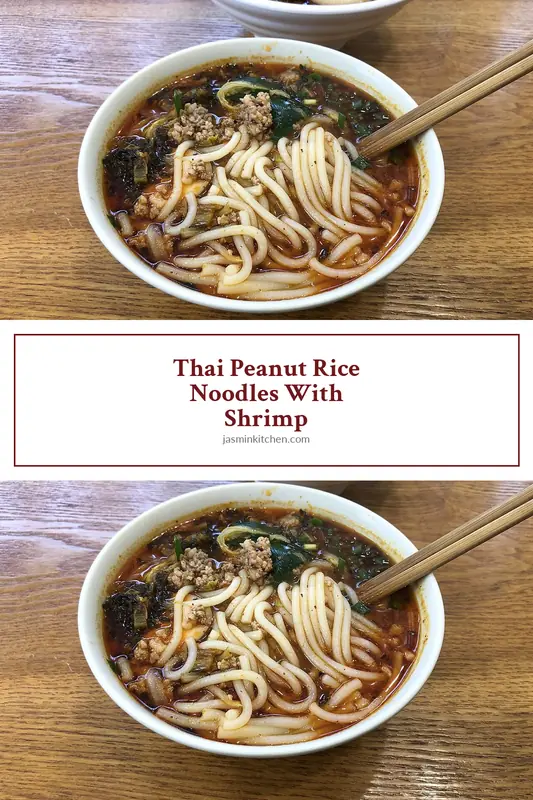
What makes these Thai peanut rice noodles so irresistible is the sauce. It’s creamy and nutty from the peanut butter, punchy from the lime juice, a little salty from the soy sauce, and it has this warm ginger-garlic backbone that makes the whole thing feel alive. Toss that sauce with silky, slippery rice noodles and plump, juicy shrimp, and you’ve got a meal that feels restaurant-worthy but comes together faster than most people can set a table. The shrimp soak up every bit of that glossy sauce. The noodles are tender but never mushy. The whole bowl is crowned with crunchy peanuts, fresh scallions, and a handful of cilantro that makes every bite feel bright and fresh.
This is not a watered-down, Americanized version of Thai flavors. It’s bold. It’s unapologetic. It’s the kind of dinner that makes you close your eyes and just appreciate the fact that you made something this good on a random Tuesday night. If you’ve been on the fence about cooking with rice noodles or peanut sauce, let this be the recipe that changes your mind. I promise — you’re going to love this one.
Why You’ll Love This Recipe
- It’s on the table in 30 minutes. From fridge to bowl, this recipe moves fast. The sauce takes about five minutes to whisk together, the shrimp cook in under five minutes, and the noodles soak rather than boil — no standing over a steaming pot.
- The sauce is genuinely crave-worthy. This isn’t a bland peanut butter situation. The balance of savory, tangy, spicy, and sweet in this Thai peanut sauce is the kind of thing people ask you for on index cards.
- Naturally gluten-free. Rice noodles and tamari make this an easy win for anyone avoiding gluten, no substitutions required.
- Customizable to the core. Swap the shrimp for tofu, chicken, or just load it with extra veggies. The sauce plays well with everything.
- Crowd-pleasing for adults and kids. The spice is totally adjustable. Leave out the chili garlic sauce and this dish is completely kid-friendly — my six-year-old eats it without complaint, and that’s saying something.
What You’ll Need
One of the best things about this recipe is that most of the ingredients are pantry staples — and the rest are easy to find at any grocery store. Here’s a closer look at the key players and what to know about each one before you start.
For the Noodles and Shrimp
- 8 oz rice noodles (medium width): Look for the flat rice stick noodles, around 3mm wide — similar to what you’d find in pad thai. They soak in hot water rather than boiling, which keeps them from turning to mush. Don’t use thin vermicelli here; they’ll get too soft in the sauce.
- 1 lb large shrimp, peeled and deveined: I use 21/25 count shrimp — big enough to be satisfying, small enough to cook quickly. Fresh or frozen both work. If using frozen, thaw completely and pat them dry with paper towels. That step matters. Wet shrimp steam instead of sear, and you want a little color on the outside.
- 1 tablespoon sesame oil: For cooking the shrimp. It adds a nutty depth right from the start.
- Salt and black pepper: A simple seasoning before the shrimp hit the pan.
- 2 cups shredded red cabbage: Adds crunch, color, and a little freshness. You can buy pre-shredded to save time.
- 1 cup shredded carrots: A handful of matchstick carrots gives sweetness and texture. Again, the pre-shredded bag from the produce section is your friend here.
- 3 green onions, sliced: For topping and a mild onion flavor woven throughout.
For the Thai Peanut Sauce
- 1/2 cup creamy peanut butter: Use a natural peanut butter with no added sugar — just peanuts and salt. It emulsifies into the sauce much more smoothly than the sugary shelf-stable kind. Give the jar a good stir before measuring.
- 3 tablespoons soy sauce or tamari: Tamari is my go-to for a gluten-free option and it has a slightly richer flavor. Low-sodium works perfectly here.
- 2 tablespoons fresh lime juice: Please, please use fresh. Bottled lime juice will taste flat and this sauce deserves better. One large lime usually gives you what you need.
- 2 tablespoons honey: Balances the salt and acid. Maple syrup is a great swap if you want to keep this vegan.
- 1 tablespoon rice vinegar: Adds brightness without the sharpness of other vinegars.
- 1 tablespoon chili garlic sauce (or sriracha): This is where the heat lives. Start with a teaspoon if you’re cooking for sensitive palates and work your way up.
- 2 cloves garlic, finely grated: Don’t use garlic powder here. Freshly grated garlic blends seamlessly into the sauce and gives it that savory punch that makes it addictive.
- 1 tablespoon fresh ginger, finely grated: Same rule — fresh only. It’s bright and warming and completely different from the dried stuff.
- 3–4 tablespoons warm water: To thin the sauce to a pourable consistency. Add one tablespoon at a time until it coats a spoon and flows easily.
For Serving
- Crushed roasted peanuts
- Fresh cilantro leaves
- Lime wedges
- Extra chili garlic sauce for the heat-seekers at the table
- Sesame seeds (optional, but pretty)
How to Make Thai Peanut Rice Noodles with Shrimp
This comes together in four simple stages: soak the noodles, make the sauce, cook the shrimp, and toss everything together. Let’s walk through each step.
- Soak the rice noodles. Place your dry rice noodles in a large bowl and cover them completely with very hot (but not boiling) water. Let them soak for 8 to 10 minutes, until they’re pliable and barely tender — they should have just a little bite left because they’ll continue to soften when tossed with the warm sauce. Drain them and rinse with cool water to stop the cooking. Set aside. Don’t skip the rinse — it removes excess starch and keeps the noodles from clumping into a giant mass.
- Make the peanut sauce. In a medium bowl, whisk together the peanut butter, soy sauce, lime juice, honey, rice vinegar, chili garlic sauce, grated garlic, and grated ginger. It will look thick and a little broken at first — that’s normal. Add warm water one tablespoon at a time, whisking constantly, until the sauce is smooth and pourable. It should coat a spoon but still flow freely. Taste it. Adjust the lime if you want more brightness, the honey if you want more sweetness, or the chili sauce if you want more fire. This is your sauce — own it.
- Cook the shrimp. Pat the shrimp very dry with paper towels and season them with a pinch of salt and black pepper. Heat the sesame oil in a large skillet or wok over medium-high heat until it shimmers. Add the shrimp in a single layer — don’t crowd them or they’ll steam instead of sear. Cook for about 2 minutes on the first side until pink and starting to curl, then flip and cook 1 more minute. They’re done when they’re opaque and have a little golden color on the outside. Pull them off the heat immediately. Overcooked shrimp are rubbery and sad, so watch them closely.
- Toss everything together. Add the drained noodles to the skillet (or a large mixing bowl if your pan isn’t big enough). Pour about two-thirds of the peanut sauce over the noodles and toss well to coat, using tongs to get every strand covered. Add the shredded cabbage and carrots and toss again. Nestle the shrimp back in. Drizzle the remaining sauce over the top or reserve it for serving — I always put a little bowl of extra sauce on the table because people want more.
- Garnish and serve. Pile the noodles into bowls and finish with crushed peanuts, fresh cilantro, sliced green onions, and a squeeze of fresh lime. Serve immediately while the noodles are still warm and glossy. These Thai peanut rice noodles are best eaten fresh — the noodles absorb the sauce quickly, so you want to dig in right away.
Tips, Variations, and Make-Ahead Ideas
Don’t Overdo the Noodle Soak
The biggest mistake people make with rice noodles is over-soaking them. If they go into the sauce completely soft, they’ll turn to mush by the time you serve. Aim for al dente — pliable but still slightly firm. They’ll finish cooking in the residual heat of the sauce.
Make the Sauce Ahead of Time
The Thai peanut sauce keeps beautifully in the fridge for up to a week in a sealed jar. It will thicken as it chills — just whisk in a splash of warm water to loosen it before using. Having the sauce prepped means dinner is genuinely 15 minutes away on a weeknight. I make a double batch and use it as a dipping sauce for spring rolls or a dressing for a quick cucumber salad later in the week. If you love versatile sauces, you’ll also love my Sesame Ginger Dipping Sauce, which uses similar pantry ingredients and works on just about everything.
Protein Swaps
Shrimp is my favorite here, but this recipe is incredibly flexible. Thinly sliced chicken breast or thigh works great — just cook it through before adding the noodles. For a vegetarian version, crispy pan-fried tofu is absolutely delicious. Press the tofu well, cube it, and cook in sesame oil until golden and crisp on all sides before tossing with the noodles. You could even use edamame straight from the freezer for a super quick plant-based option.
Veggie Add-Ins
This dish loves extra vegetables. Thinly sliced bell peppers (red or yellow for sweetness), snap peas, bean sprouts, baby bok choy, or even thinly sliced cucumber added fresh at the end all work beautifully here. If you’re on a big veggie kick, you might also enjoy my Rainbow Veggie Stir-Fry, which uses a similar sesame-soy flavor profile and is just as fast to throw together on a weeknight.
Storage and Leftovers
These Thai peanut rice noodles store well in the fridge for up to 3 days in an airtight container. The noodles will absorb more sauce as they sit, so when reheating, add a splash of water or a little extra peanut sauce to loosen things up. I actually think the leftovers eaten cold the next day — straight from the container at lunch — are one of life’s underrated pleasures. The flavors deepen overnight and the whole thing tastes even more intense in the best possible way. For another noodle dish worth making ahead, check out my Cold Sesame Noodles with Cucumber — it’s made to be eaten cold and is a total lunch-box hero.
Making It Spicier (or Not)
The chili garlic sauce in this recipe is the heat control dial. One tablespoon gives a mild tingle that most adults enjoy. Two tablespoons and you’re in genuinely spicy territory. For a kids’ version, leave it out entirely and set a bottle on the table for the grown-ups to add themselves. If you’re a heat fanatic, a drizzle of chili crisp oil over the finished bowls adds a different kind of heat — fragrant and oily and absolutely incredible.
Serving Suggestions
These noodles are a complete meal on their own, but if you’re feeding a crowd or want to stretch the recipe, they pair beautifully with a simple cucumber salad dressed in rice vinegar and sesame oil, steamed edamame with sea salt, or crispy egg rolls from the freezer aisle (no judgment). For a beautiful dinner party spread, serve them alongside my Thai Mango Avocado Salad — the bright, fresh flavors are a perfect counterpoint to the rich peanut noodles.
Frequently Asked Questions About Thai Peanut Rice Noodles with Shrimp
Can I use a different type of noodle?
Absolutely. While rice noodles give this dish its authentic, silky texture and keep it naturally gluten-free, you can use lo mein noodles, udon, soba, or even regular spaghetti in a pinch. Just cook them according to their package instructions rather than soaking. The peanut sauce is delicious on any noodle, so use what you have and don’t stress about it.
My peanut sauce is too thick — how do I fix it?
This happens to everyone the first time, especially if the peanut butter you used is on the denser side. Just add warm water, one tablespoon at a time, and whisk vigorously after each addition. The sauce will loosen and emulsify into something smooth and pourable. If you accidentally add too much water, a little extra peanut butter whisked in will bring it back to a thicker consistency.
Can I make this dish ahead for meal prep?
Yes, with one small tip: keep the sauce separate until you’re ready to eat. If you toss everything together and refrigerate it, the noodles will absorb most of the sauce by the next day and can get a little dry. Instead, store the cooked noodles, cooked shrimp, veggies, and sauce in separate containers. When you’re ready to eat, just toss, add a splash of water to loosen the sauce, and you’ve got a fresh-tasting meal in minutes. It makes for a fantastic work lunch all week long.
Is this recipe gluten-free?
It is, as long as you use tamari instead of regular soy sauce and double-check your chili garlic sauce label (most are gluten-free, but it’s worth a quick check). Rice noodles are naturally gluten-free, and every other ingredient in the recipe is as well. This is one of my go-to dishes when I’m cooking for guests with dietary restrictions because it’s delicious and inclusive without requiring any awkward swaps.
What’s the best way to reheat leftover Thai peanut rice noodles?
The quickest method is the stovetop — add the noodles to a skillet with a splash of water or extra peanut sauce over medium heat and toss until warmed through, about 2 to 3 minutes. You can also microwave them in a covered bowl with a tablespoon of water stirred in, heating in 60-second bursts. What I’d actually recommend, though, is eating them cold. Cold Thai peanut rice noodles are genuinely one of the best leftovers in existence — the flavors concentrate overnight and it’s incredible straight from the fridge for lunch the next day.
One Last Thing Before You Go
If you make one thing from this blog this week, let it be these Thai peanut rice noodles with shrimp. They are fast, they are bold, they are exactly the kind of dinner that makes you feel like you really have your life together — even if you threw it together in a panic at 6pm because you forgot to plan dinner. The sauce alone is worth bookmarking this recipe for. Make a double batch of it. Put it on everything. You’ve been warned.
I’d love to know how yours turn out! Drop a comment below and tell me what you added, what you swapped, or how fast it disappeared at your table. And if you save this recipe to Pinterest, it genuinely helps more people find it — so please do! Happy cooking, friend. This one’s going to be a regular in your rotation, I just know it.